


News
How Q-Switched Laser Works: Mechanical Acoustic Shockwave for Precise Pigment Disruption
The primary mechanism of Q‑switched lasers is mechanical acoustic shockwave‑induced pigment fragmentation. When the laser energy is delivered to pigmented targets in the skin—such as melanin granules or tattoo pigments—it generates intense acoustic pressure waves that cause the pigment particles to shatter and disintegrate almost instantaneously. Once fragmented, the pigment particles no longer retain their original yellow‑brown appearance and become visually undetectable.
The disrupted pigment debris is subsequently cleared through two main pathways:
Metabolic clearance via the lymphatic and immune systems: Fine particles are recognized and engulfed by macrophages and other immune cells, then gradually eliminated through the body’s natural metabolic processes.
Elimination through epidermal shedding: Some pigment remnants induce controlled, superficial tissue damage or alteration, leading to the formation of a thin crust. As the skin heals, the crust naturally exfoliates, carrying the pigment debris away. This mechanism is particularly effective in tattoo removal.
In addition, a portion of superficially located pigment may be shed over time through the normal epidermal turnover cycle.
During treatment, operators can clearly hear the distinctive “popping” or “snapping” sounds characteristic of Q‑switched lasers. These acoustic signals are a direct manifestation of the mechanical shockwave effect. The pitch and intensity of the sounds vary in real time depending on pigment density, depth, and the applied energy level—serving both as an audible indicator of proper laser operation and as a rough gauge of treatment intensity and efficacy.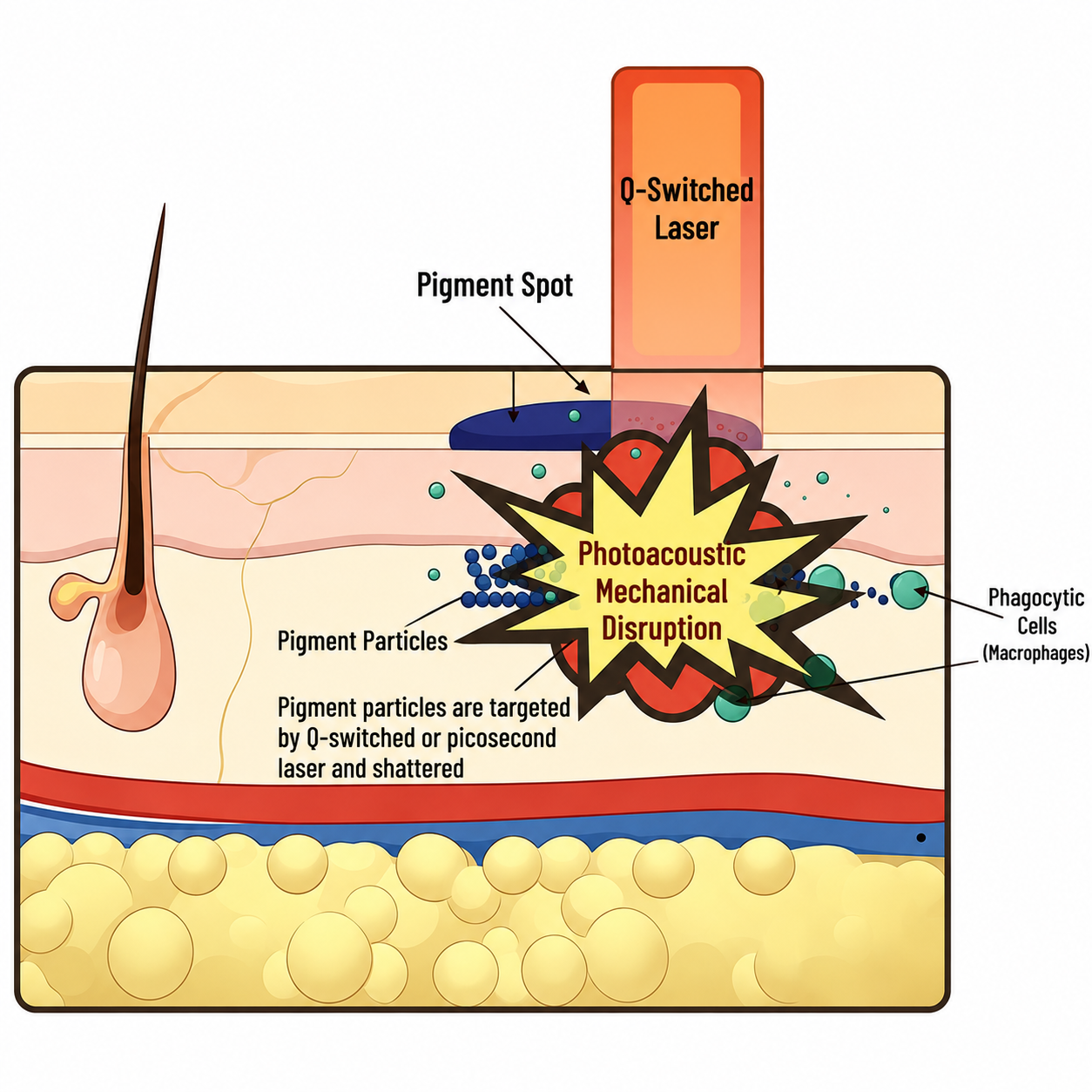
上一条:Potential Injury Risks of Q-Switched or Picosecond 1064nm Lasers
下一条:Shengdayu 1200mJ Q-Switched Nanosecond Laser – 1064nm/532nm Medical Aesthetic OEM