


News

The fractional treatment handpiece of a fractional CO₂ laser system is typically equipped with a circular "distance gauge" that rests against the skin, ensuring the skin surface is positioned at the laser's focal point during treatment. The
MORE DETAILS
Whether a frosting reaction occurs after Q-switched laser treatment—and its intensity and depth—is primarily determined by four key factors: laser wavelength, lesion location, pigment density, and fluence. Understanding the interplay among these factors is essential for accurately gauging treatment endpoints and balanc……
MORE DETAILS
The “frosting reaction” is an immediate clinical endpoint that occurs following Q-switched or picosecond laser treatment when a large amount of pigment is fragmented. It serves as an important visual indicator that a therapeutic dose has been achieved.
MORE DETAILS
The 532nm wavelength falls within the yellow-green spectrum and exhibits exceptionally high absorption by both melanin and hemoglobin—with a relative absorption coefficient of approximately 56. It also coincides with a peak absorption wavelength of oxyhem
MORE DETAILS
Within the Q-switched laser family, the 694nm and 755nm wavelengths each possess distinct physical characteristics and clinical indications. Compared with 1064nm, these two wavelengths exhibit notable differences in pigment absorption, penetration depth,
MORE DETAILS
The primary advantage of picosecond lasers lies in their ultrashort pulse durations, typically ranging from 300 to 700 picoseconds. However, shorter is not always better—there exists a practical “lower limit” for pulse width. While extremely short pulses
MORE DETAILS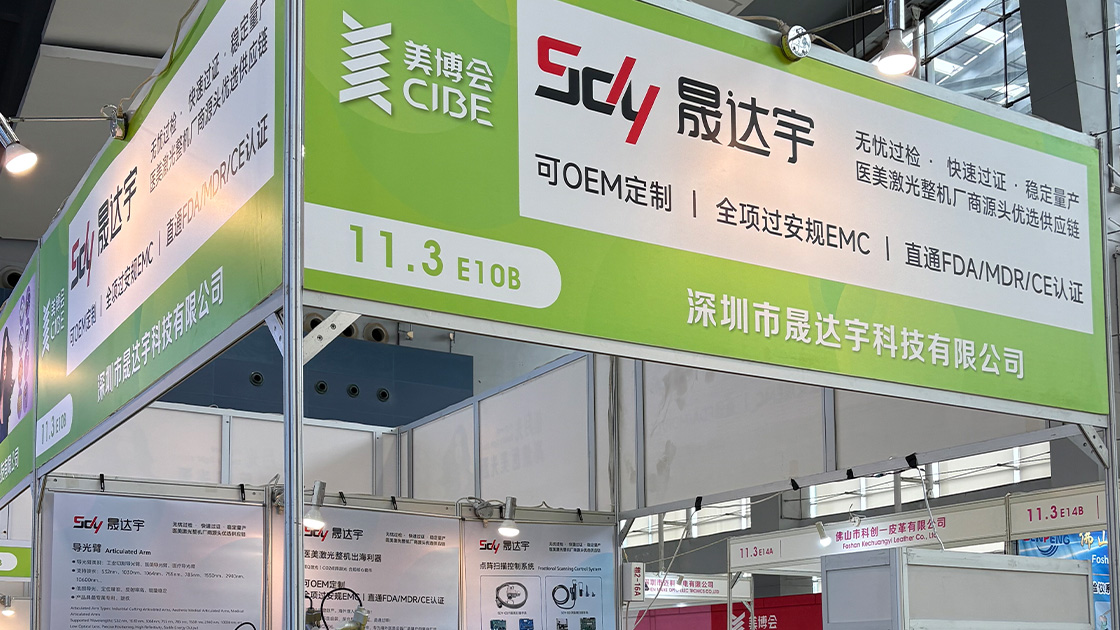
From September 4 to 6, 2026, the 71st China (Guangzhou) International Beauty Expo was grandly held at the China Import and Export Fair Complex in Guangzhou. Shenzhen Shengdayu Technology Co., Ltd. made a strong appearance at the event, showcasing its core
MORE DETAILS
The 1064nm and 532nm wavelengths of Q‑switched lasers exhibit distinctly different physical properties, leading to markedly divergent parameter selection logic and endpoint responses in clinical practice. A thorough understanding of these differences is e
MORE DETAILS
Mathematical Relationships in Fluence Settings for Q‑Switched and Picosecond Lasers [Reference Values Only] Laser parameter selection is not governed by a fixed formula, but rather involves a balanced consideration of multiple variables—wavelength,
MORE DETAILS
Proper parameter selection is fundamental to achieving both efficacy and safety in laser therapy. For Q‑switched and picosecond lasers, fluence settings are primarily influenced by the following four factors: 1. Laser Wavelength Commonly used wa
MORE DETAILS
The primary advantage of picosecond lasers lies in their ultrashort pulse duration—approximately one‑tenth that of conventional Q‑switched lasers. This dramatic pulse compression results in substantially higher peak power per pulse, producing more pronoun
MORE DETAILS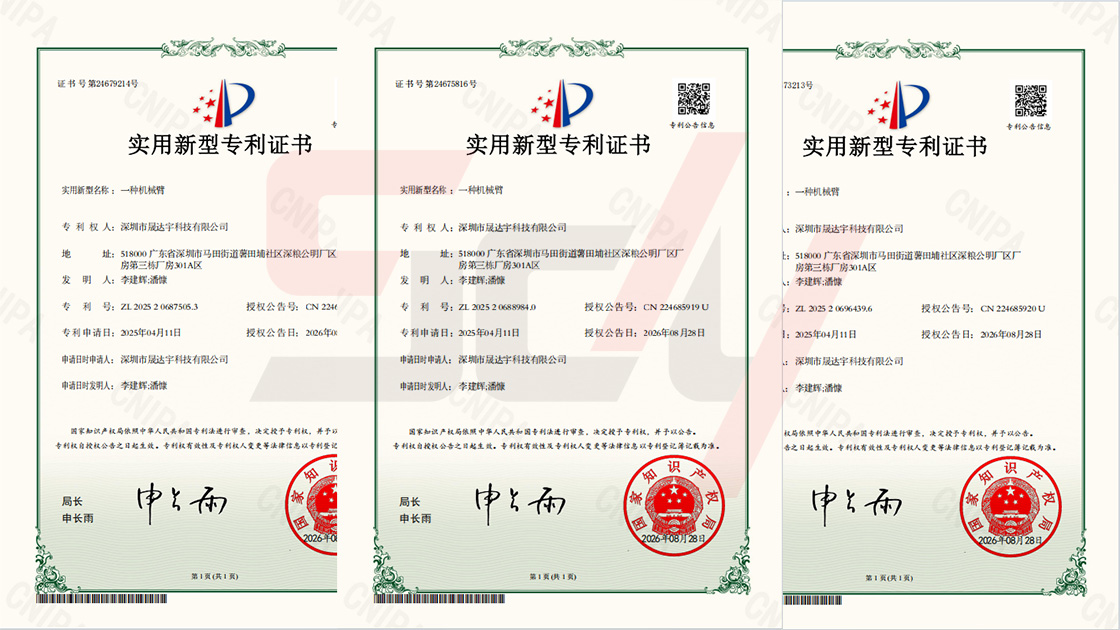
Recently, Shenzhen Shengdayu Technology Co., Ltd. is pleased to announce that three newly filed utility model patent applications have been officially granted by the China National Intellectual Property Administration (CNIPA). This achievement not only s
MORE DETAILS